
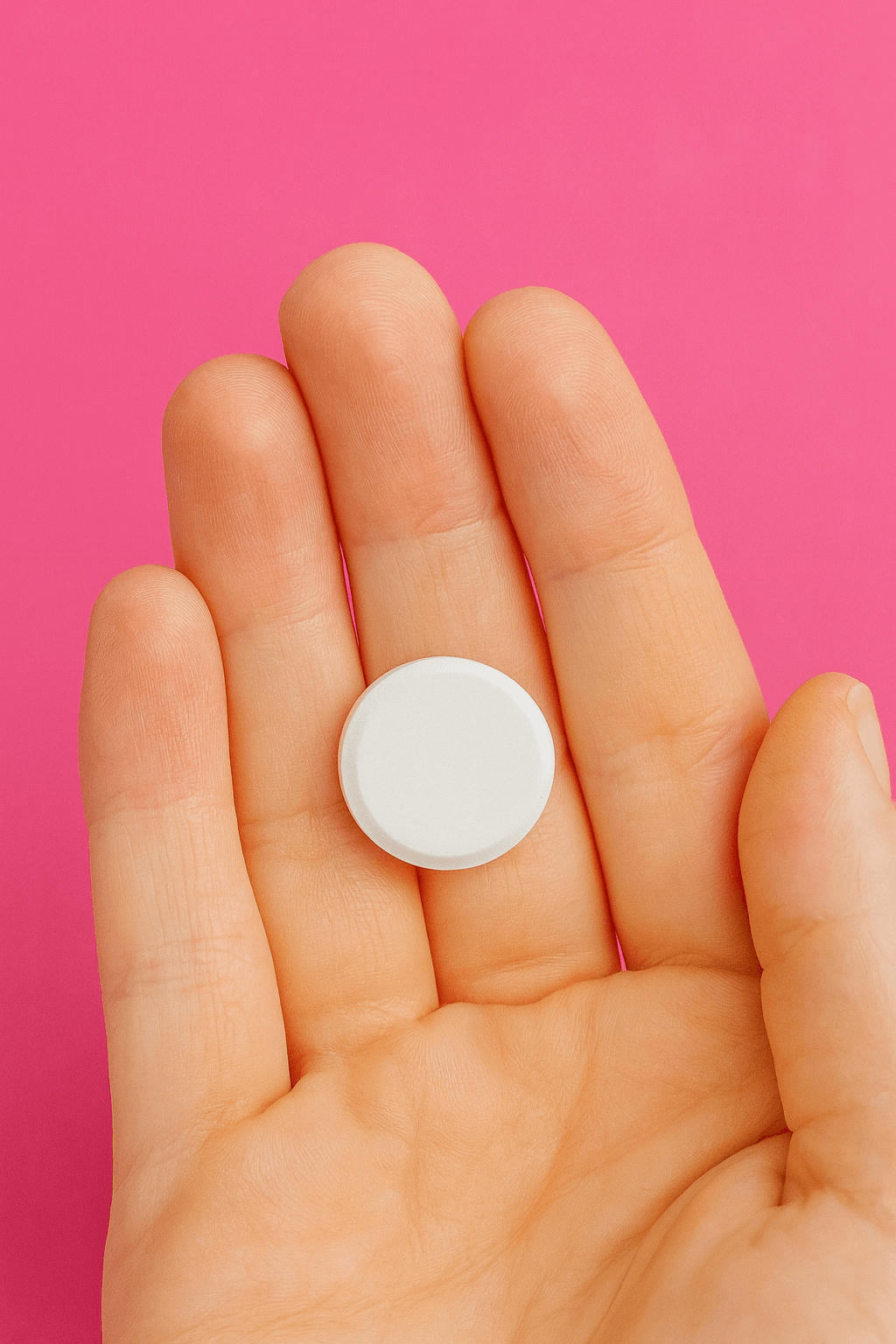
Cycle and contraception: how hormonal methods work
Hormonal contraception is not just “a pill so you do not get pregnant”. It is a tool that affects the whole cycle. If you notice changes in your mood, body, and sensations, that is not random. It is hormones at work, only now they come from the outside rather than from your own natural rhythm.
How does it work?
Most hormonal methods have one main goal: to prevent ovulation, meaning to stop the egg from being released.
When there is no ovulation, pregnancy cannot happen. To do this, the body receives synthetic versions of estrogen and progesterone. They “trick” the brain into thinking ovulation has already happened.
Some methods do not fully suppress ovulation, but they make the vagina and uterus less suitable for sperm:
- they thicken cervical mucus
- they thin the endometrium, the layer where an embryo would usually attach
What forms are there?
- Combined pills, taken every day at the same time
- Progestin-only pills, which are gentler for some people but require strict regularity
- A patch or vaginal ring, changed weekly or monthly
- Injections, usually given every 3 months
- A hormonal IUD, placed in the uterus and effective for 3 to 5 years
How does it affect the cycle?
If you use hormonal contraception:
- the cycle becomes “artificial”: there is no ovulation, and “periods” are actually a response to a break in pills or hormones
- cycle symptoms may become milder: less PMS, pain, or acne
- mood and libido may change: for some people they improve, for others they do not
- discharge may become lighter or disappear, which can be normal with a continuous regimen
Important to know
- You may not feel the phases the way you used to, because they are not really happening
- This does not “turn off” your femininity or desire: you are still you, just in a different hormonal rhythm
- If you stop using the method, ovulation usually returns within a couple of months
- Hormonal contraception is not a “pill for every problem”. It has benefits and downsides, and it is worth discussing them with a doctor
How IVA can help
If you take hormones, you can mark that in IVA. It is still useful to track wellbeing, mood, sexuality, and appetite, because even in an artificial cycle the body continues to live its own life.